
Microsoft Fabric & Analytics
One platform for data engineering, warehousing, and visualization — eliminating integration purgatory.
The End of Fragmented Analytics
Historically, building an enterprise analytics suite meant managing billing and integration complexities across a maze of disconnected tools — Azure Data Factory for ETL pipelines, a separate Data Lake for storage, Synapse for SQL processing, and Power BI for visualization. Pushing data across those service boundaries created immense technical debt, networking headaches, and authentication complexity that consumed more engineering time than actual data analysis.
Microsoft Fabric changes everything. As a unified SaaS analytics platform, it consolidates data engineering, data warehousing, real-time analytics, data science, and business intelligence into a single experience built on a foundational shared storage layer called OneLake. Your data engineers, data scientists, and business analysts all work on the exact same data — no copying, no format conversion, no integration pipelines between tools.
For organizations already invested in the Microsoft ecosystem, Fabric represents the natural evolution of their data strategy. It inherits the security model from Entra ID, the governance from Purview, and the visualization from Power BI — while providing dramatically simplified administration through consumption-based capacity units rather than managing individual Azure PaaS service configurations.
Why Organizations Move to Fabric
Ignoring these challenges compounds technical debt at an exponential rate — every quarter of inaction multiplies the eventual remediation cost.
Data Duplication Costs
Traditional analytics architectures require copying datasets five or more times — from source to landing zone, to staging, to warehouse, to Power BI import model. Fabric's DirectLake mode eliminates this duplication entirely, querying Parquet files directly from OneLake without data movement.
Integration Headaches
Maintaining network peering, managed identities, and authentication bridges between Azure Data Factory, Synapse, ADLS Gen2, and Power BI consumes weeks of engineering effort for every new data pipeline. Fabric collapses these into a single authenticated workspace.
PaaS Complexity
Managing individual Azure PaaS service scaling, patching, and billing across Synapse Serverless, Dedicated SQL Pools, Spark Clusters, and ADF Integration Runtimes requires deep specialized knowledge. Fabric abstracts this into simple SaaS capacity purchasing.
What We Deliver
Modern Microsoft ecosystem capabilities engineered for enterprise-scale transformation and measurable productivity improvement.
OneLake Architecture Design
Deploying Microsoft's foundational 'OneDrive for Data' architecture — a single, multi-format data lake that serves as the unified storage layer for your entire analytics stack. We design the workspace hierarchy, lakehouse structure, and access control model that organizes your data logically while maintaining strict security boundaries between business units.
Data Engineering & Pipelines
Building the ingestion and transformation logic that feeds your lakehouse from dozens of source systems. We design Fabric Data Factory pipelines and Spark notebooks that extract, cleanse, and model raw operational data into analytically optimized structures — implementing the medallion architecture (Bronze → Silver → Gold) within Fabric's unified environment.
Real-Time Intelligence
Ingesting and analyzing massive streaming data — IoT sensor arrays, application telemetry, financial transaction feeds — with sub-second latency. Fabric's Real-Time Analytics uses KQL (Kusto Query Language) databases and Eventstreams to provide live operational dashboards updated in real-time rather than batch-refreshed hourly.
Power BI DirectLake & Semantic Models
Obliterating traditional Power BI dataset import limitations by enabling dashboards to read OneLake data directly in memory — combining the performance of import mode with the freshness of DirectQuery. We design semantic models that serve as the curated business logic layer between raw data and executive consumption.
Fabric Modernization Framework
A practical path from fragmented Azure analytics to unified Fabric intelligence.
Assessment & Strategy
We evaluate your existing data infrastructure — Synapse, ADF, ADLS, Power BI workloads — and design the migration path to Fabric. We identify which workloads benefit most from unification, which can migrate as-is, and which require refactoring to leverage Fabric-native capabilities.
Lakehouse Design
We architect the OneLake structure — workspace hierarchy, lakehouse tables, security boundaries, and shortcut connections to external sources. We implement the medallion architecture and configure data governance policies ensuring Purview classification flows through to every layer.
Pipeline Migration
We adapt existing ADF pipelines and Synapse notebooks into Fabric-native Data Factory and Spark workflows. We implement incremental loading, error handling, and monitoring — validating data quality at every transformation stage against production baselines.
BI Modernization
We convert Power BI import models to DirectLake semantic models, eliminating refresh schedules and data staleness. We redesign dashboards to leverage Fabric's enhanced performance and deploy governance controls for workspace management and report distribution.
What You Receive
Every engagement produces concrete, actionable deliverables — not theoretical frameworks that require additional investment to become useful.
Fabric Migration Assessment
A detailed technical assessment comparing your current Azure analytics architecture against Fabric capabilities — including cost modeling, feature gap analysis, and a prioritized migration roadmap with effort estimates per workload.
Lakehouse Architecture Document
A comprehensive design document defining workspace structure, table schemas, partitioning strategies, security boundaries, shortcut configurations, and Purview integration — serving as the blueprint for your unified data platform.
Pipeline Documentation & Runbooks
Operational documentation for every data pipeline including source-to-target mappings, transformation logic, error handling procedures, monitoring dashboards, and troubleshooting guides for the operations team.
Executive BI Suite
A production-ready collection of Power BI dashboards using DirectLake mode — covering the KPIs, dimensions, and drill-through paths defined during requirements gathering, with RLS security and automated subscription delivery.
Related Services
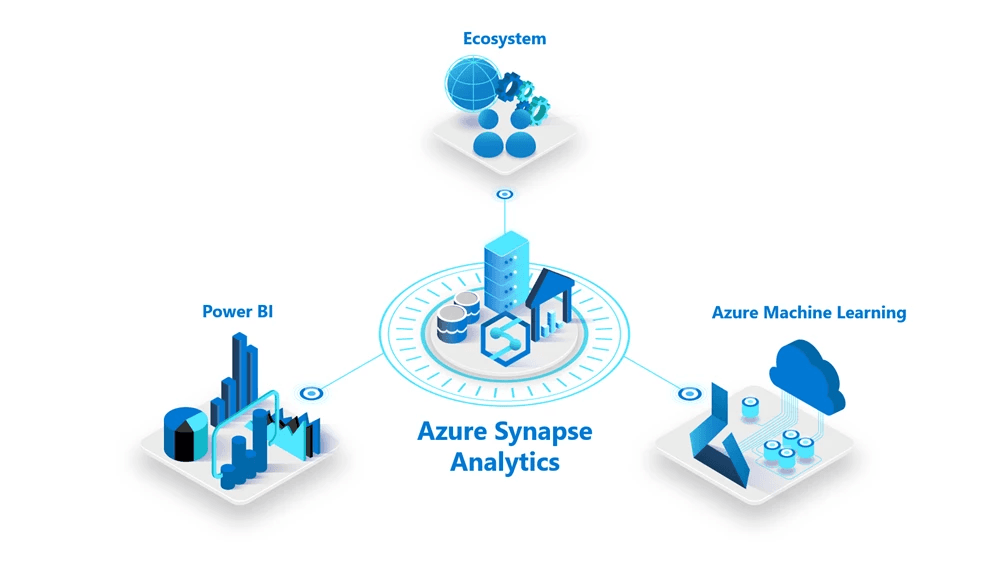
Azure Data & Analytics Services
Unlocking powerful insights using modern big data architectures on Microsoft Azure.

Microsoft & Enterprise Strategy
Aligning your vast Microsoft ecosystem investments into an impenetrable, highly efficient digital workplace.
AWS Data & Analytics
Transforming raw operational data into actionable business intelligence using AWS.
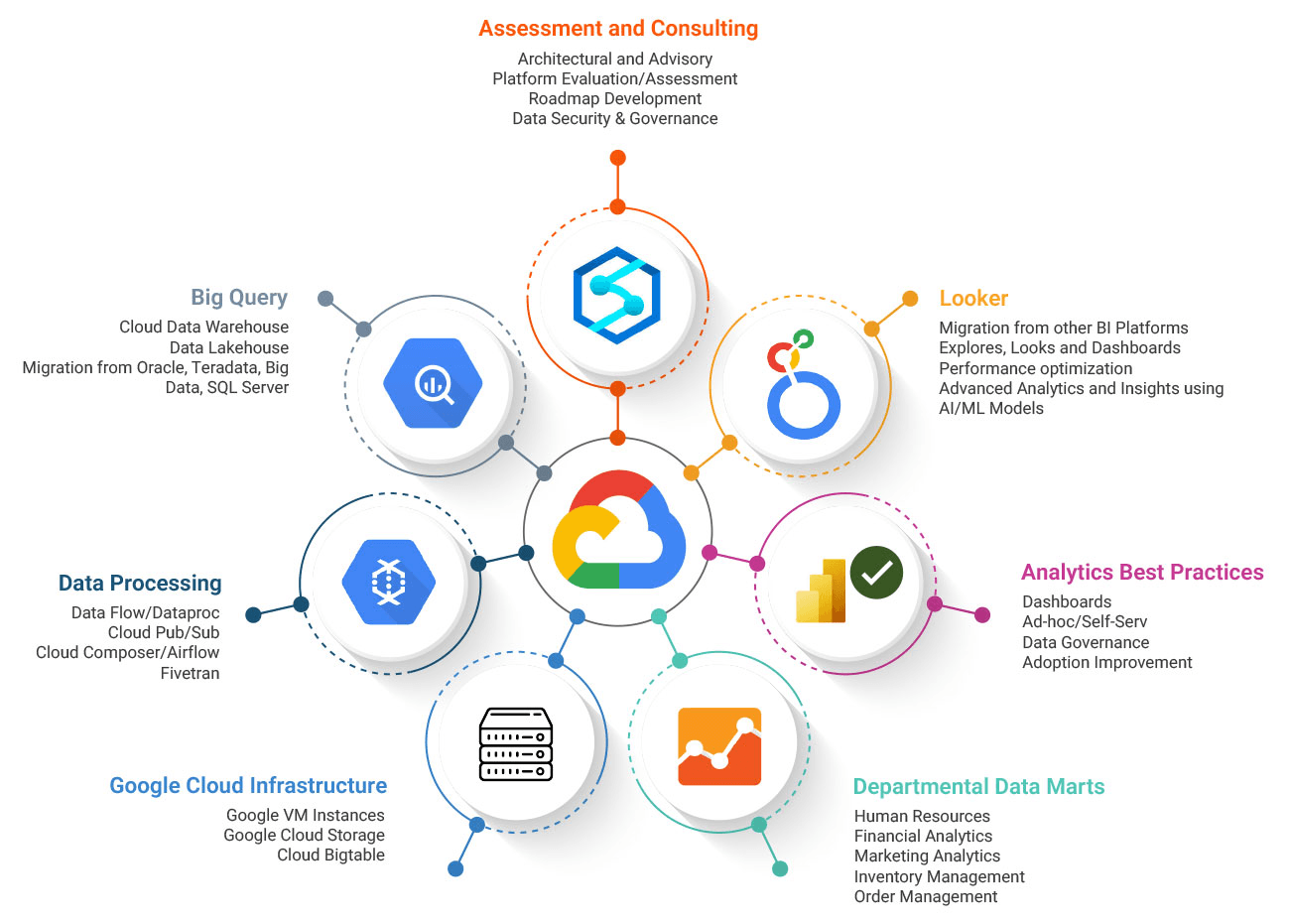
GCP Data & Analytics
Harnessing BigQuery's serverless architecture for petabyte-scale analytics and real-time intelligence.
Azure Data & Analytics Services
Unlocking powerful insights using modern big data architectures on Microsoft Azure.
Microsoft & Enterprise Strategy
Aligning your vast Microsoft ecosystem investments into an impenetrable, highly efficient digital workplace.
AWS Data & Analytics
Transforming raw operational data into actionable business intelligence using AWS.
GCP Data & Analytics
Harnessing BigQuery's serverless architecture for petabyte-scale analytics and real-time intelligence.