
GCP Infrastructure & DevOps
Kubernetes-native infrastructure built by the platform experts who understand containers at Google-scale.
Container-Native by Design
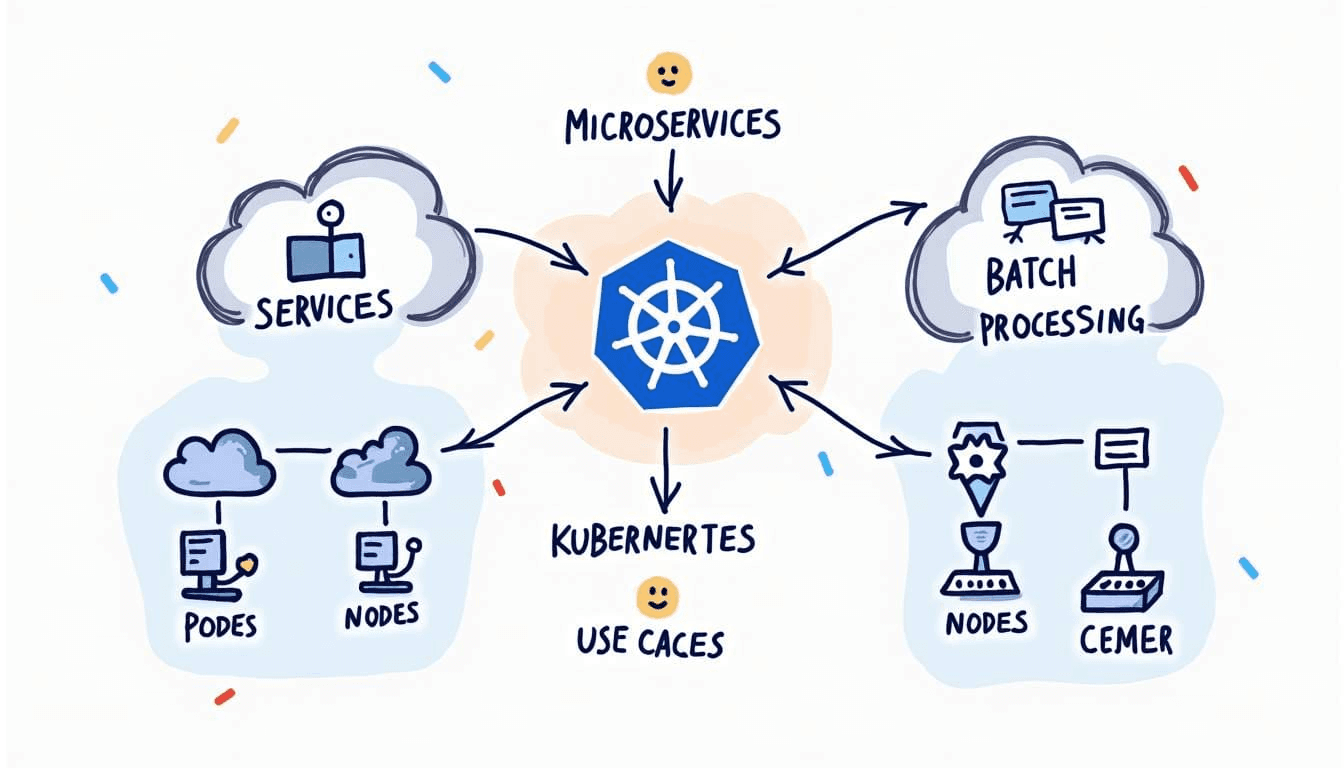
Google Cloud was designed from the ground up for containerized, microservice architectures. Where competing platforms bolted Kubernetes support onto existing VM-centric infrastructure, GCP builds on the same Borg-derived container orchestration technology that runs Google Search, YouTube, and Gmail — handling billions of containers weekly at a scale no other platform can match.
We engineer GKE clusters, Cloud Run deployments, and fully automated CI/CD pipelines that make deploying containerized applications effortless. Our infrastructure designs embrace the GCP-native service mesh, logging, and monitoring stack — providing deep observability into every container, every request, and every deployment without the operational overhead of self-managed monitoring infrastructure.
For workloads that do not require full Kubernetes complexity, we deploy Cloud Run — the fully managed serverless container platform that scales to zero when idle and handles thousands of concurrent requests automatically. Cloud Run provides the simplicity of serverless with the flexibility of containers — no cold starts, no VM management, and instant scaling.
When to Invest in GCP Infrastructure
Scenarios where GCP infrastructure engineering delivers transformative value.
Kubernetes Operations Burden
Your team spends more time managing Kubernetes cluster upgrades, node pool scaling, and certificate rotation than building application features. GKE Autopilot mode eliminates all node management — Google handles the infrastructure while your team focuses purely on deploying containers.
Complex Microservice Architecture
Your application consists of 30+ microservices with intricate inter-service communication patterns. Without a service mesh, tracing request flows, enforcing mTLS encryption, and implementing traffic management becomes increasingly impossible as services multiply.
Deployment Pipeline Chaos
Your CI/CD pipeline is a fragile chain of manually configured Jenkins jobs, custom shell scripts, and tribal knowledge. Nobody can deploy when the one engineer who built the pipeline is on vacation. You need automated, repeatable, self-documenting deployment infrastructure.
Cost-Inefficient Compute
You are paying for 24/7 VM capacity to serve workloads that are idle 80% of the time. Cloud Run's scale-to-zero billing model eliminates waste entirely — you pay exclusively for the milliseconds your containers spend processing actual requests.
Infrastructure Engineering Capabilities
Enterprise-grade container orchestration and automation services.
Deploying production-grade Google Kubernetes Engine clusters with proper node pool design, network policy enforcement, pod security standards, and autoscaling configurations. We design clusters that handle massive traffic variations without manual intervention while maintaining strict resource isolation between workloads.
Deploying containerized applications on Cloud Run for workloads where Kubernetes complexity is unnecessary. Cloud Run provides fully managed scaling, request-based billing, and zero cold-start container delivery — ideal for APIs, webhooks, and event-driven microservices that experience variable traffic patterns.
Building deterministic, fully automated deployment pipelines that take code from commit to production with zero manual intervention. We design multi-stage pipelines with automated testing, security scanning, container building, and progressive deployment — enabling teams to ship changes safely multiple times per day.
Implementing comprehensive monitoring, logging, tracing, and alerting that gives your team complete visibility into application health, performance, and reliability. We apply Google's Site Reliability Engineering (SRE) principles — error budgets, service level objectives (SLOs), and blameless post-mortems.
Infrastructure Delivery Approach
A systematic approach to building production-ready GCP infrastructure from the ground up.
Assessment & Design
We evaluate your application architecture, team capabilities, and scaling requirements to determine the optimal compute platform — GKE for complex multi-service architectures, Cloud Run for simpler/variable workloads, or a hybrid approach. We design the network topology, security model, and deployment strategy.
Infrastructure Codification
We define all GCP resources as Terraform configurations stored in version control. VPCs, subnets, GKE clusters, Cloud Run services, IAM bindings, and monitoring dashboards — everything is reproducible, auditable, and peer-reviewed through pull request workflows.
Pipeline Construction
We build the CI/CD pipelines that automate the entire path from source code to production deployment. Cloud Build configurations handle compilation, testing, container image creation, and deployment orchestration — with Binary Authorization ensuring only scanned images reach production.
Operations & Knowledge Transfer
We configure Cloud Monitoring with SLO-based alerting, deploy operational runbooks, and conduct hands-on training with your team. We establish an SRE framework with error budgets and post-mortem practices that enable your team to operate the infrastructure independently.
Industry Applications
Google Cloud solutions built for the world's most demanding data, ML, and infrastructure challenges.
SaaS & Technology Companies
Deploying multi-tenant SaaS platforms on GKE with namespace-level tenant isolation, custom metrics-based autoscaling, and Cloud Deploy managed continuous delivery — enabling the engineering team to ship features five times per day with zero-downtime deployments to 500+ customer environments.
Media & Content Delivery
Building Cloud Run-based media processing pipelines that automatically transcode uploaded video content into multiple formats and resolutions — scaling from zero to 10,000 concurrent transcoding jobs in seconds and costing nothing when no uploads are in progress.
IoT & Industrial Automation
Deploying GKE Edge clusters on Google Distributed Cloud for manufacturing environments — running ML inference models directly on factory floor hardware with central management from GCP and automatic model updates deployed through Cloud Build pipelines.
Related Services
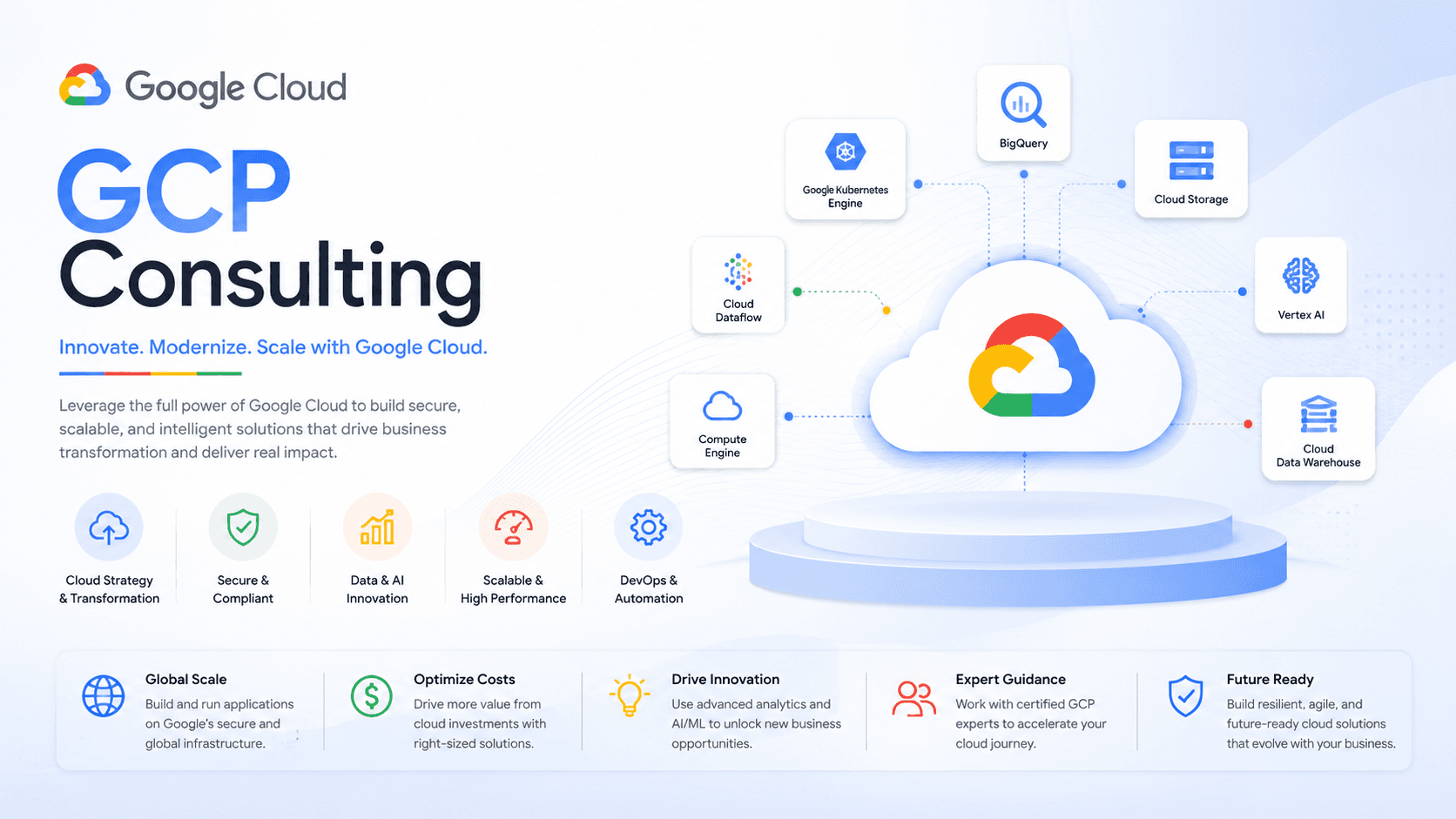
Google Cloud Consulting & Strategy
Architecting cost-efficient, open-source-first cloud strategies on Google Cloud Platform.
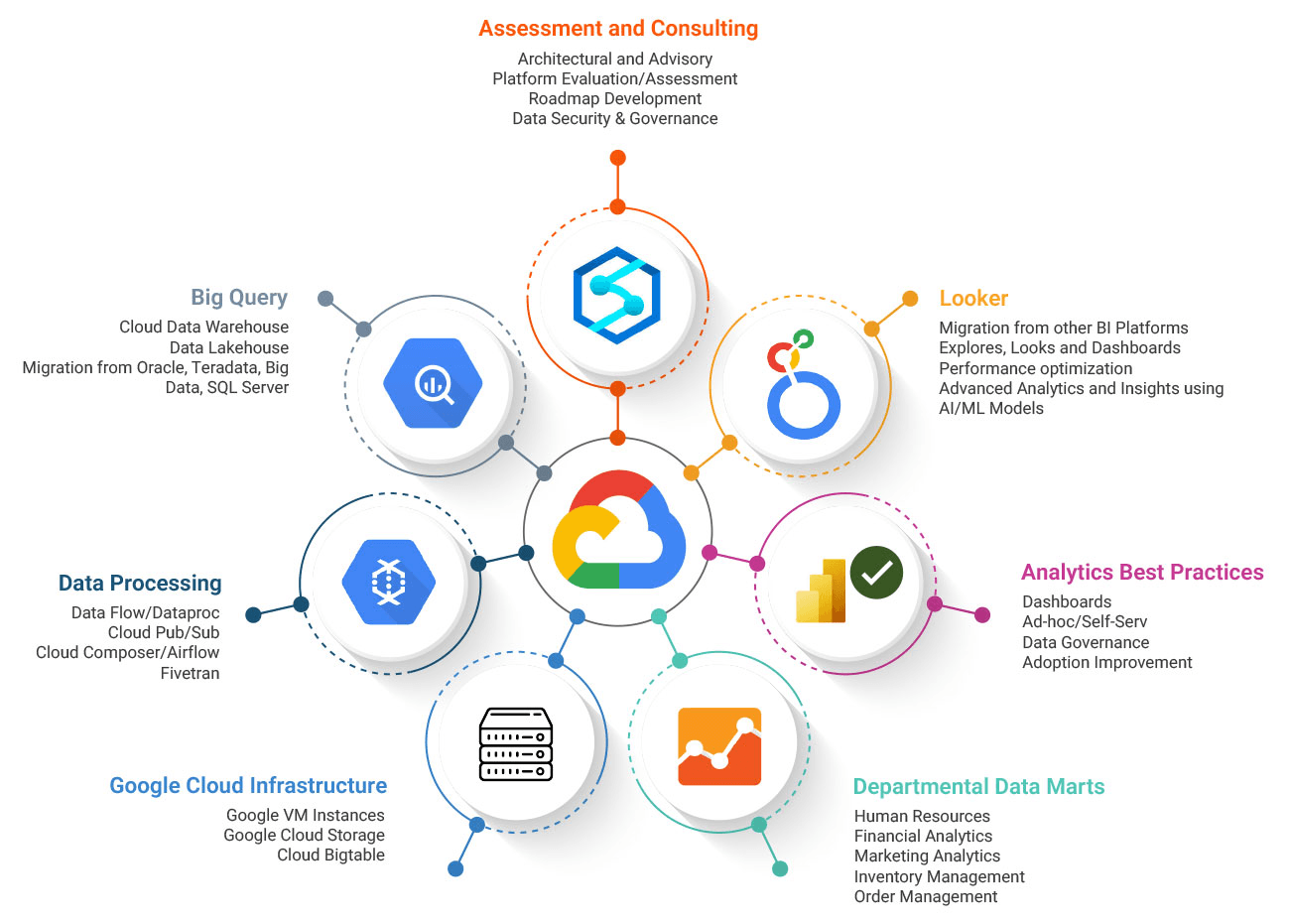
GCP Data & Analytics
Harnessing BigQuery's serverless architecture for petabyte-scale analytics and real-time intelligence.
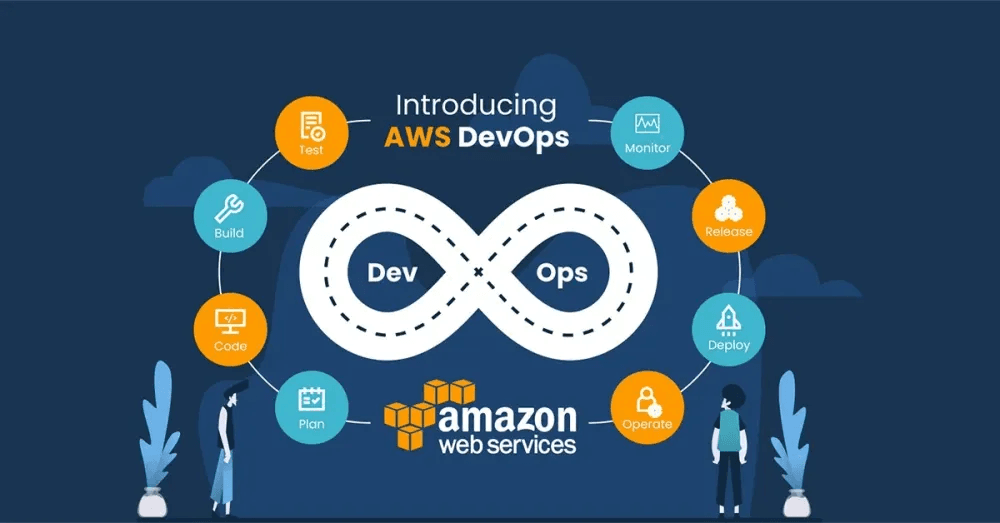
Azure Infrastructure & Networking
Designing resilient network topologies and scalable cloud infrastructure in Azure.
Google Cloud Consulting & Strategy
Architecting cost-efficient, open-source-first cloud strategies on Google Cloud Platform.
GCP Data & Analytics
Harnessing BigQuery's serverless architecture for petabyte-scale analytics and real-time intelligence.
Azure Infrastructure & Networking
Designing resilient network topologies and scalable cloud infrastructure in Azure.