
Azure Data & Analytics Services
Unified data platforms that transform fragmented enterprise data into executive-ready intelligence.
Unified Intelligence with Azure
Modern enterprises pull data from SaaS applications, legacy on-premises servers, cloud databases, and multi-cloud environments simultaneously. Without a centralized nervous system, data engineers spend countless hours manually extracting datasets for weekly reporting rather than analyzing trends — and the reports they produce are already stale by the time they reach decision-makers.
We design robust modern data estates using Azure Synapse Analytics, Azure Data Factory, Databricks, and Microsoft Fabric. By constructing automated ETL/ELT pipelines and dimensional data models, we deliver real-time, pristine data directly to Power BI — ready for self-service exploration by business analysts who previously waited weeks for IT to run a custom query.
Our data engineering practice emphasizes governance and accessibility equally. The most powerful data warehouse in the world is useless if your finance team cannot trust the numbers it produces. We implement data quality frameworks, lineage tracking, and row-level security that give every stakeholder confidence in the metrics they are using to make million-dollar decisions.
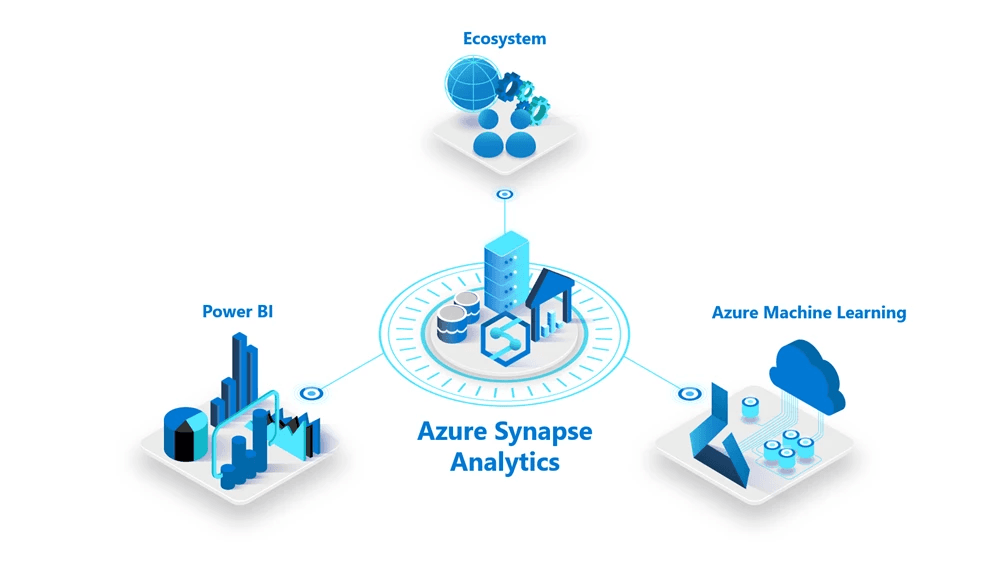
Curing Data Fragmentation
These challenges compound daily. Without strategic intervention, each month adds cost, risk, and technical debt to your Azure environment.
Manual Reporting Attrition
Business analysts burn 60% of their work week in Excel running VLOOKUP chains across 15 different exported CSVs instead of performing the strategic analysis they were hired to deliver. By the time the monthly board report is compiled, the data is 3 weeks old.
Data Swamps
Failing to implement proper schema governance, data quality validation, and cataloging transforms organized Data Lakes into unqueryable, chaotic data swamps where nobody trusts any dataset because nobody knows when it was last refreshed or which business rules were applied.
Cost Inefficiencies
Running dedicated on-premise analytical servers requires 24/7 compute provisioning for queries that are only executed occasionally. Organizations pay for 8,760 hours of compute annually to serve queries that run for a total of 200 hours — a 97% waste rate.
Data Engineering Capabilities
End-to-end data platform services from ingestion through visualization.
01Modern Data Warehousing
Aggregating enormous datasets from disparate source systems into high-performance, query-optimized cloud warehouses. We design dimensional models using Kimball methodology that enable business analysts to construct complex analytical queries without requiring SQL expertise or data engineering support.
02Automated Data Pipelines
Building complex ETL/ELT integrations that merge data across a vast variety of APIs, databases, flat files, and streaming sources. We design pipelines that are self-healing — automatically retrying failed extractions, alerting on schema changes, and quarantining malformed records without crashing the entire workflow.
03Enterprise BI & Visualization
Delivering stunning, real-time dashboarding suites that transform complex datasets into intuitive visual narratives. We design Power BI implementations that serve executives, managers, and analysts simultaneously — each viewing the same underlying data through role-appropriate lenses with strict security enforcement.
04Data Governance & Cataloging
Implementing the policies, tools, and organizational structures that ensure your data platform remains trustworthy, discoverable, and compliant as it scales. Without governance, even the most sophisticated data architecture degrades into an untrusted black box within 12-18 months.
Data Platform Engineering
A systematic approach to building trusted, governed data platforms that serve the entire organization.
Audit & Requirements
Audit & Requirements
We evaluate your existing source systems, data quality, and BI requirements through stakeholder interviews and technical assessment. We identify the highest-impact use cases — the specific business questions that, if answered reliably, would generate the most value for the organization.
Ingest & Integrate
Ingest & Integrate
We construct Azure Data Factory or Fabric pipelines to pull data from source systems — CRMs, ERPs, SaaS APIs, databases, and flat file drops. Every pipeline includes schema validation, error handling, and automated retry logic to ensure reliable data delivery.
Transform & Model
Transform & Model
Raw data is normalized, deduplicated, and modeled into analytical schemas using dbt, Databricks notebooks, or Synapse stored procedures. We implement the medallion architecture — Bronze (raw), Silver (cleaned), Gold (business-ready) — with automated testing at each layer.
Visualize & Enable
Visualize & Enable
Curated datasets are connected to Power BI with optimized semantic models, pre-built executive dashboards, and self-service exploration workspaces. We train business analysts to build their own reports and establish a governance framework for dashboard lifecycle management.
Related Services
Microsoft Fabric & Analytics
Orchestrating the unified SaaS platform encompassing Data Factory, Synapse, and Power BI.
AWS Data & Analytics
Transforming raw operational data into actionable business intelligence using AWS.
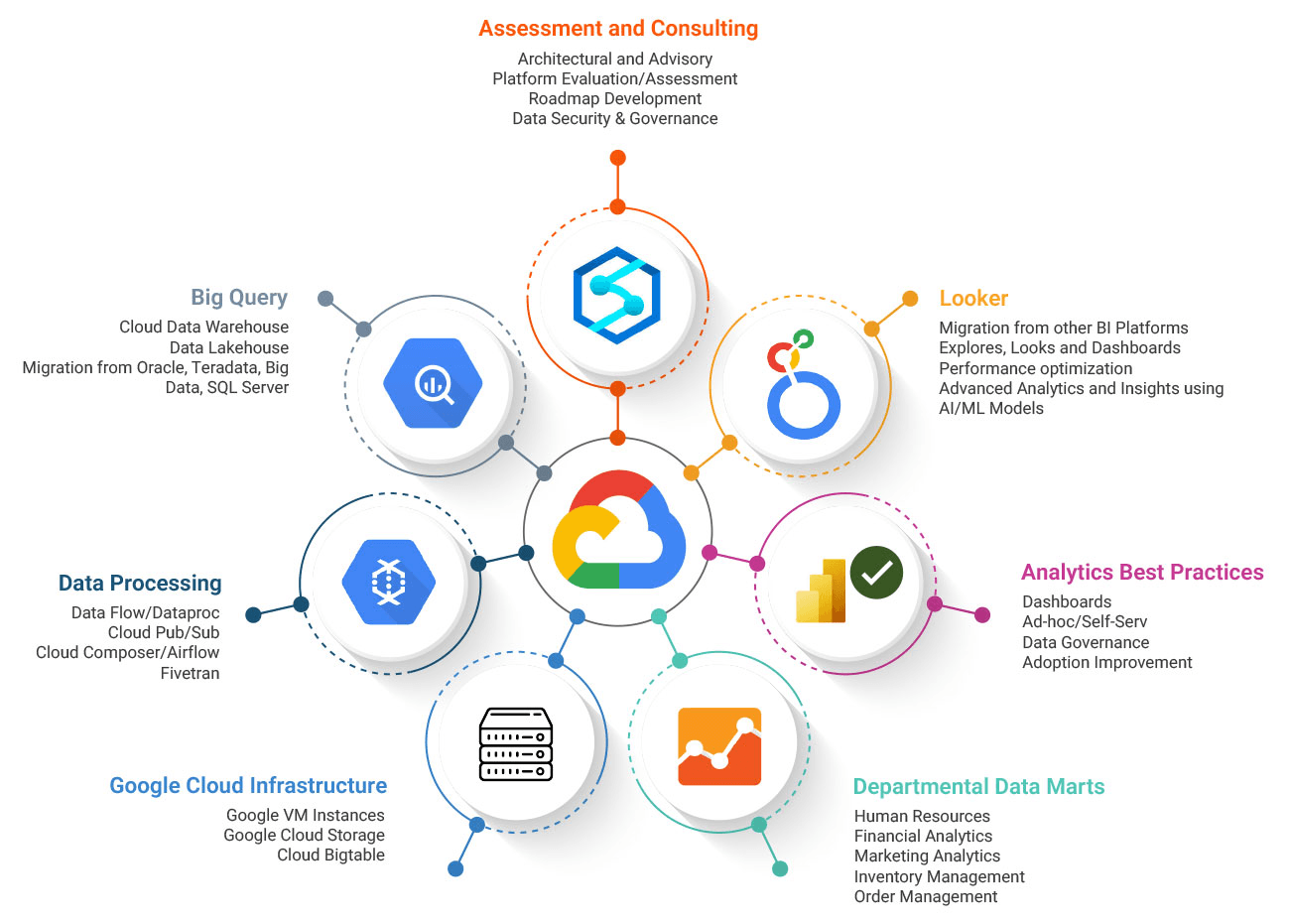
GCP Data & Analytics
Harnessing BigQuery's serverless architecture for petabyte-scale analytics and real-time intelligence.
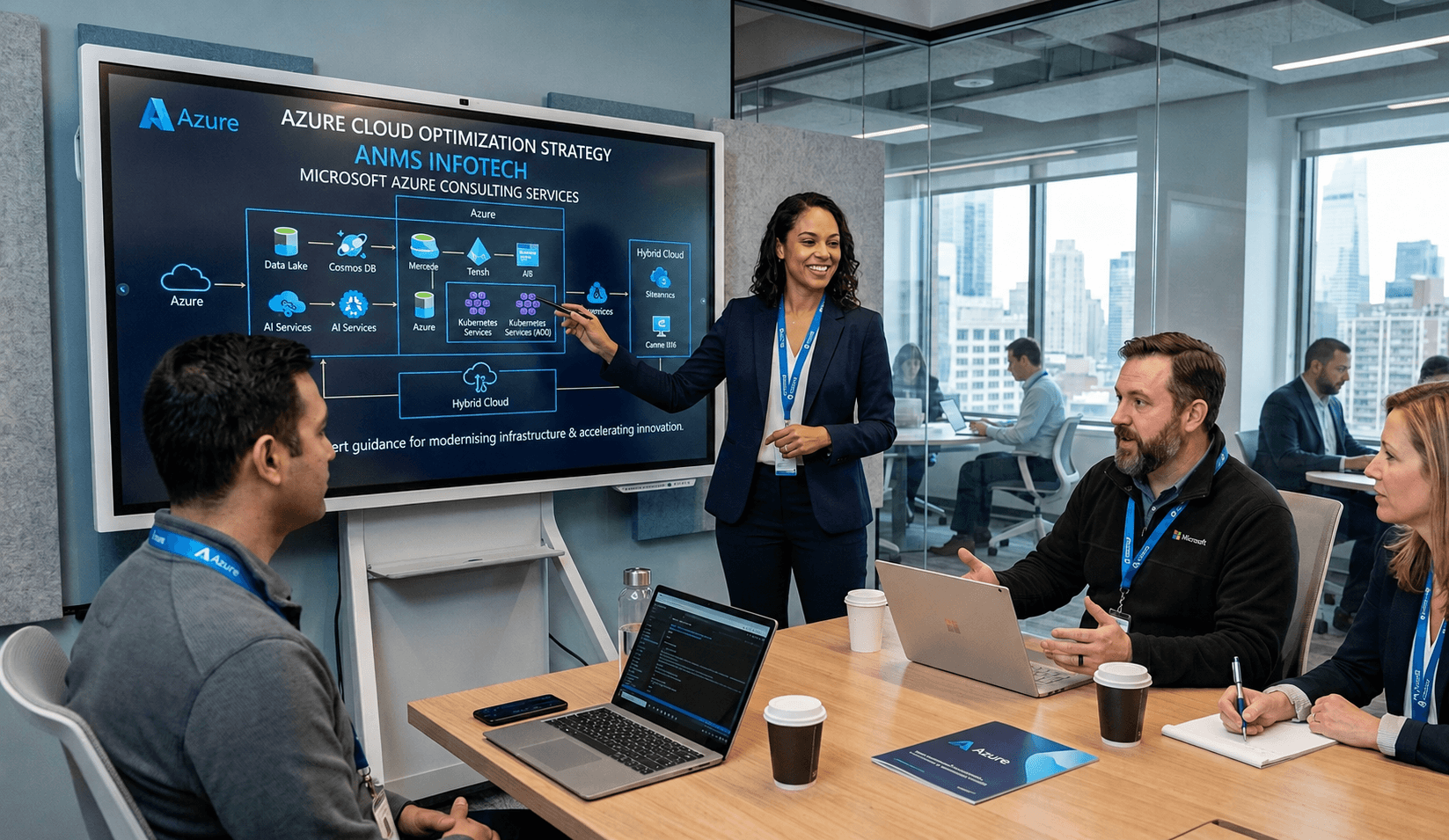
Azure Consulting & Strategy
Enterprise-grade planning to align your Microsoft Azure investments with core business objectives.
Microsoft Fabric & Analytics
Orchestrating the unified SaaS platform encompassing Data Factory, Synapse, and Power BI.
AWS Data & Analytics
Transforming raw operational data into actionable business intelligence using AWS.
GCP Data & Analytics
Harnessing BigQuery's serverless architecture for petabyte-scale analytics and real-time intelligence.
Azure Consulting & Strategy
Enterprise-grade planning to align your Microsoft Azure investments with core business objectives.