
.NET Application Development
From legacy monoliths to cloud-native microservices — modern .NET engineering at enterprise scale.
Engineering the Microsoft Enterprise
Legacy .NET Framework applications trap businesses on aging Windows Server operating systems, preventing cloud-native deployment, blocking containerization, and inflicting structural security vulnerabilities that Microsoft no longer patches. Every month these monoliths remain in production, the technical debt compounds and the modernization cost increases.
We refactor aging .NET Framework monoliths and design pristine greenfield applications using modern .NET 8+. Our architectures leverage microservices communicating via gRPC or REST, containerized for deployment on Azure Kubernetes Service or Azure App Service — running on lightweight Linux containers that cost 40% less than equivalent Windows Server VMs.
Our .NET engineering practice extends beyond backend APIs. Using Blazor WebAssembly and Server, we build rich interactive frontends entirely in C# — enabling full-stack development teams to deliver complete web applications without maintaining separate JavaScript frameworks. For real-time requirements, we implement SignalR architectures supporting tens of thousands of concurrent connections.
The Burden of Technical Debt
Ignoring these challenges compounds technical debt at an exponential rate — every quarter of inaction multiplies the eventual remediation cost.
Windows Server Lock-In
Old .NET Framework 4.x applications are completely restricted from running on cost-efficient Linux containers or modern serverless platforms — forcing organizations to maintain expensive Windows Server VM estates indefinitely.
Deployment Friction
Monolithic C# codebases take 30-60 minutes to compile and deploy as a single unit, making minor feature pushes a terrifying, all-hands-on-deck ordeal with high risk of regression across unrelated functionality.
Performance Ceilings
Modern .NET 8 delivers 3-5x performance improvements over .NET Framework for web workloads — dramatically reducing the cloud compute footprint required to handle the same request volume, directly lowering Azure hosting costs.
What We Deliver
Modern Microsoft ecosystem capabilities engineered for enterprise-scale transformation and measurable productivity improvement.
Cloud-Native API Engineering
Building massively scalable Web APIs and backend services from scratch using modern .NET 8+ with Clean Architecture principles. We design APIs that handle thousands of concurrent requests per second on minimal compute — using async programming patterns, efficient serialization, and connection pooling to maximize throughput per dollar of infrastructure.
Legacy Monolith Modernization
Surgically extracting monolithic .NET Framework applications into scalable microservices without the risk and cost of a full rewrite. We use the Strangler Fig pattern — gradually replacing legacy components with modern services while the old system continues operating, eliminating the need for a dangerous big-bang cutover.
Blazor & Full-Stack C#
Creating rich, interactive web applications using Blazor WebAssembly and Server — eliminating the need for separate JavaScript frameworks. Your C# development team can build the entire application stack with a single language, sharing validation logic, data models, and business rules between client and server.
Containerization & DevOps
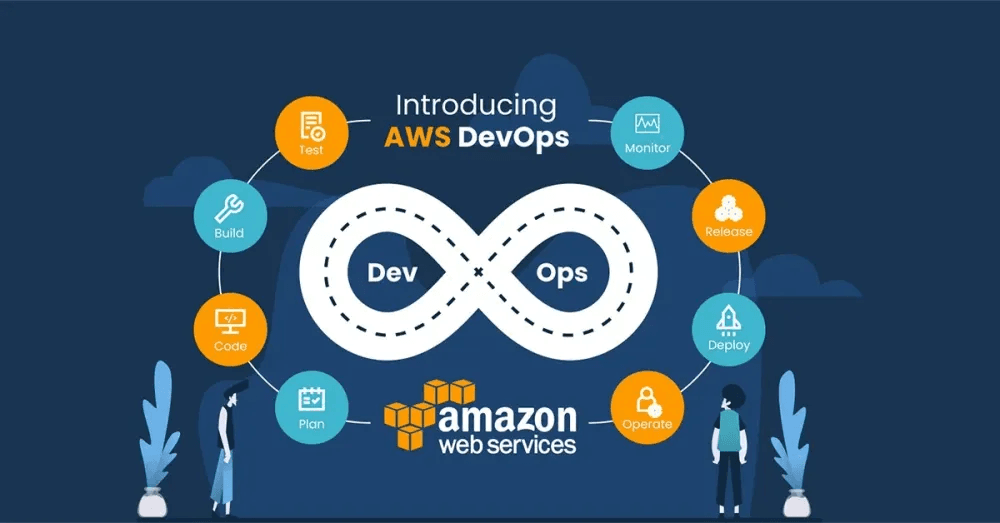
Packaging .NET applications into lightweight Docker containers and deploying them through automated CI/CD pipelines to Azure Kubernetes Service or Azure App Service. We design the container architecture, write production-grade Dockerfiles, and implement health checks, graceful shutdown handling, and horizontal pod autoscaling.
Software Engineering Methodology
How we build and modernize enterprise .NET applications with confidence.
Domain Discovery
We map your business entities, invariants, and workflow boundaries using Domain-Driven Design workshops. This produces the bounded context map that determines microservice boundaries, aggregate design, and data ownership — preventing the distributed monolith anti-pattern.
Architecture Selection
Based on domain complexity, scaling requirements, and team size, we select the deployment topology — Azure App Service (simplest), Container Apps (managed containers), or full AKS (maximum flexibility). We never over-engineer: simple domains get simple architectures.
Development & Testing
We develop using strict Test-Driven Development (TDD) principles with unit tests, integration tests against real database instances, and contract tests for API consumers. Every pull request passes automated quality gates before code review — catching regressions immediately.
Deployment & Monitoring
We configure CI/CD pipelines deploying to Azure through automated stages — build, test, security scan, staging deployment, smoke test, production promotion. Application Insights is configured for request tracing, dependency mapping, and performance alerting.
What You Receive
Every engagement produces concrete, actionable deliverables — not theoretical frameworks that require additional investment to become useful.
Architecture Decision Records
A documented collection of every significant technical decision — framework selections, database choices, authentication strategies, hosting models — with rationale, alternatives considered, and trade-offs accepted. This becomes your team's institutional knowledge base.
API Documentation
Auto-generated OpenAPI (Swagger) documentation with request/response examples, authentication requirements, and error code catalogs. Published as an interactive developer portal enabling frontend teams and external integrators to consume your APIs independently.
Infrastructure-as-Code Repository
A Terraform or Bicep repository defining all Azure infrastructure — App Services, AKS clusters, databases, networking, monitoring — as version-controlled, peer-reviewed code that can reproduce your entire environment from scratch in any Azure region.
Modernization Roadmap
For legacy modernization projects — a phased extraction plan mapping each monolith component to its target microservice, with dependency analysis, estimated effort, risk assessment, and recommended sequencing.
Related Services
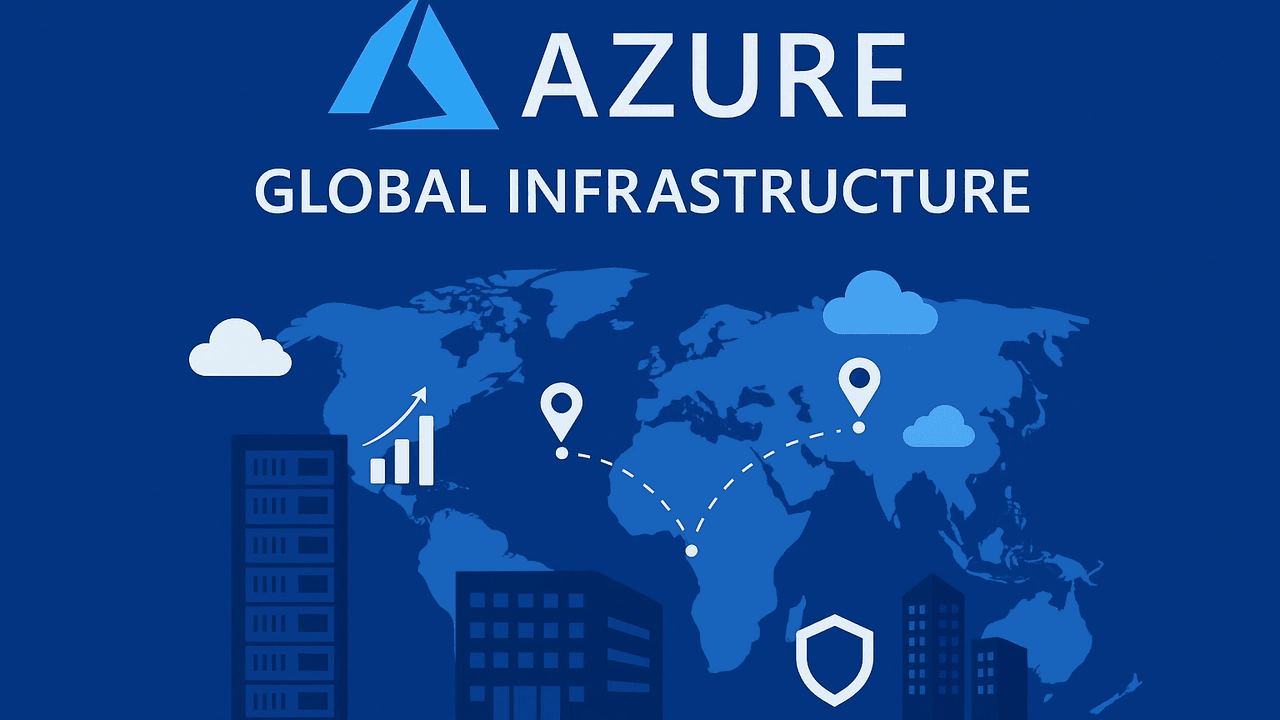
Azure Infrastructure & Networking
Designing resilient network topologies and scalable cloud infrastructure in Azure.
Microsoft Fabric & Analytics
Orchestrating the unified SaaS platform encompassing Data Factory, Synapse, and Power BI.
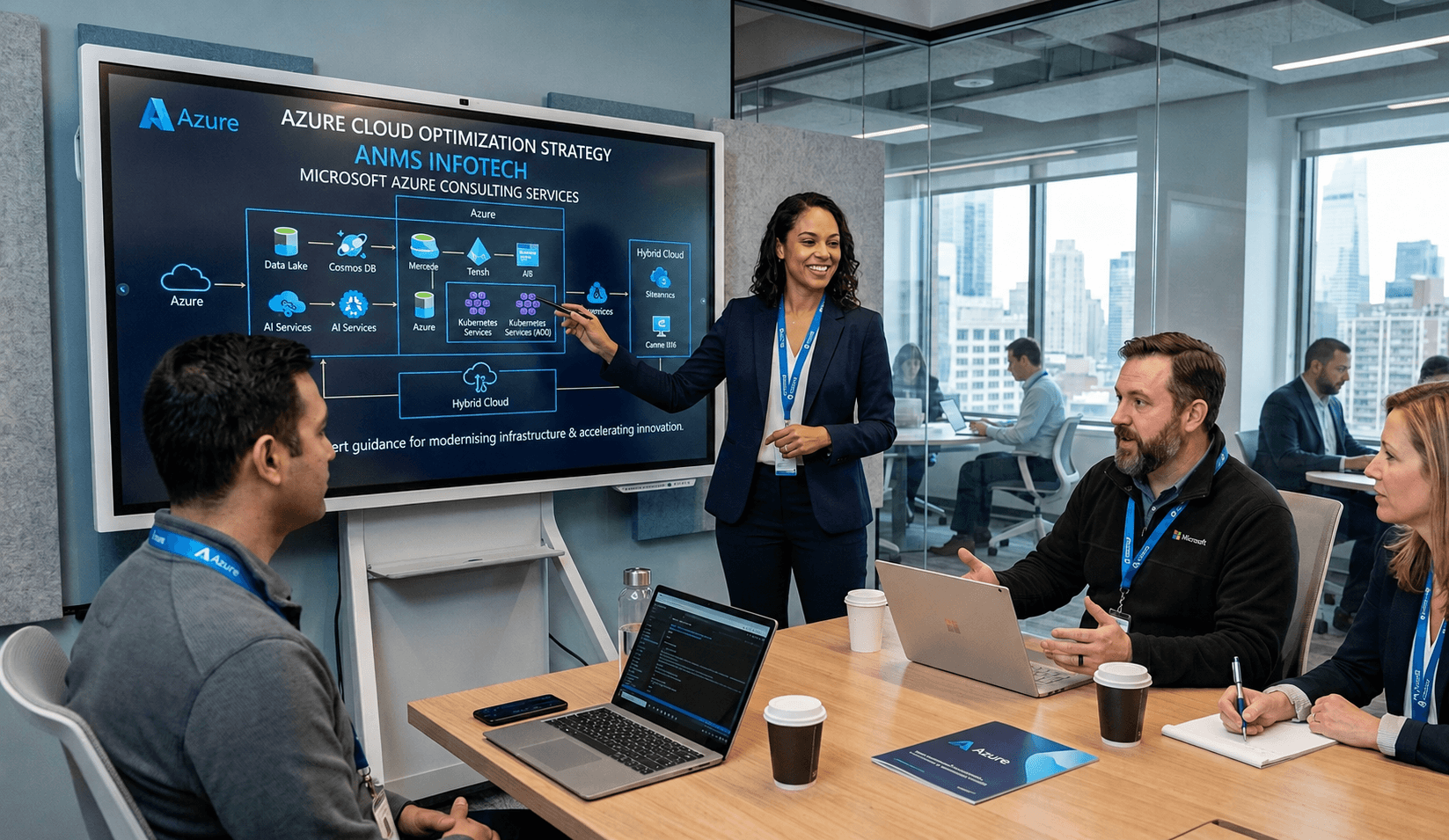
Azure Consulting & Strategy
Enterprise-grade planning to align your Microsoft Azure investments with core business objectives.
Azure Infrastructure & Networking
Designing resilient network topologies and scalable cloud infrastructure in Azure.
Microsoft Fabric & Analytics
Orchestrating the unified SaaS platform encompassing Data Factory, Synapse, and Power BI.
Azure Consulting & Strategy
Enterprise-grade planning to align your Microsoft Azure investments with core business objectives.