
MongoDB & Document Databases
Flexible document databases engineered for modern applications that outgrow rigid relational schemas.
Beyond Relational Constraints
Relational databases force your data into rigid tabular schemas that require expensive JOIN operations to reconstruct the objects your application actually works with. For modern applications — content platforms, product catalogs, IoT telemetry, and real-time personalization engines — this relational impedance mismatch creates unnecessary complexity, poor performance, and painful schema migrations every time your data model evolves.
MongoDB's document model stores data in the same JSON-like structure your application code naturally produces and consumes — eliminating the ORM translation layer that adds latency and complexity. When your application evolves a data structure, MongoDB adapts without downtime-inducing schema migrations. This flexibility does not come at the expense of performance — with proper indexing, MongoDB handles millions of operations per second with single-digit millisecond latency.
We specialize in designing MongoDB schemas that avoid the common anti-patterns that destroy document database performance — unbounded arrays, excessive embedding, and missing compound indexes. The flexibility that makes MongoDB powerful also makes it dangerous without architectural discipline; our expertise ensures you capture the benefits while avoiding the pitfalls.

When Documents Beat Tables
Unaddressed database challenges silently erode application performance, regulatory posture, and competitive advantage — compounding daily.
Schema Rigidity
Every feature release requires painful database migrations — adding columns, creating join tables, and running multi-hour ALTER TABLE operations on production databases. Your development velocity is bottlenecked by database schema changes that require DBA coordination and maintenance windows.
Performance at Scale
Your relational database queries involve 8-table JOINs to reconstruct the objects your application needs, and response times have grown from 50ms to 500ms as data volumes increased. Adding indexes helps temporarily but introduces write amplification that slows inserts and updates.
Horizontal Scaling Needs
Your application data is growing beyond the capacity of a single database server, and relational database sharding is notoriously complex. You need a database that was designed from the ground up for distributed, horizontal scaling across commodity hardware.
What We Deliver
Enterprise database capabilities spanning design, migration, performance tuning, and continuous optimization.
Schema Design & Data Modeling
Designing document schemas that optimize for your application's actual read and write patterns — not academic normalization rules. We determine embedding vs. referencing decisions based on data access frequency, document size projections, and update patterns — ensuring your schema delivers maximum query performance at scale.
MongoDB Atlas Deployment
Deploying production-grade MongoDB environments on Atlas — MongoDB's fully managed cloud database service. We configure cluster sizing, network security, backup policies, and cross-region replication to ensure your database meets performance, availability, and compliance requirements from day one.
Horizontal Sharding & Scaling
Implementing MongoDB's native sharding architecture to distribute data across multiple servers for applications that have outgrown single-instance capacity. We design shard key strategies that ensure even data distribution and efficient query routing — the two factors that determine whether sharding delivers performance improvement or creates new bottlenecks.
Performance Analysis & Optimization
Diagnosing and resolving MongoDB performance issues using profiler data, explain plan analysis, and serverStatus metrics. We identify slow queries, missing indexes, inefficient aggregations, and connection management issues that are degrading your application's database performance.
MongoDB Engineering Process
A data-driven methodology for building and optimizing document database architectures.
Data Modeling
We analyze your application's data access patterns — which queries are most frequent, what data is read together, how often documents are updated, and how large individual documents can grow. This analysis drives every embedding vs. referencing decision in the schema design.
Architecture Design
We design the deployment architecture — replica set topology, shard key selection (if sharding is required), network security configuration, and backup strategy. We size the cluster based on workload benchmarking rather than arbitrary capacity guessing.
Implementation & Migration
We deploy the MongoDB environment, implement the schema design, create indexes, and migrate data from the source system. For migrations from relational databases, we design the document transformation logic that converts normalized rows into denormalized documents.
Optimization & Monitoring
We configure MongoDB monitoring dashboards tracking operation latency, connection counts, replication lag, and storage utilization. We establish index maintenance procedures and ongoing performance review cadences with automated alerting for anomalies.
Related Services
MySQL & Open-Source Databases
Scaling MySQL for high-traffic web applications and migrating to cloud-managed alternatives.
Microsoft SQL Server
Enterprise SQL Server performance tuning, high availability design, and cloud migration expertise.
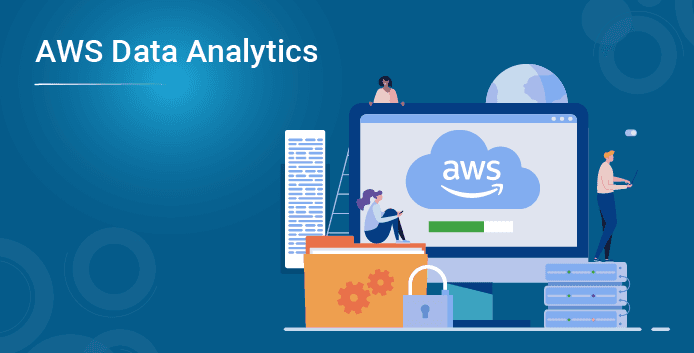
AWS Data & Analytics
Transforming raw operational data into actionable business intelligence using AWS.
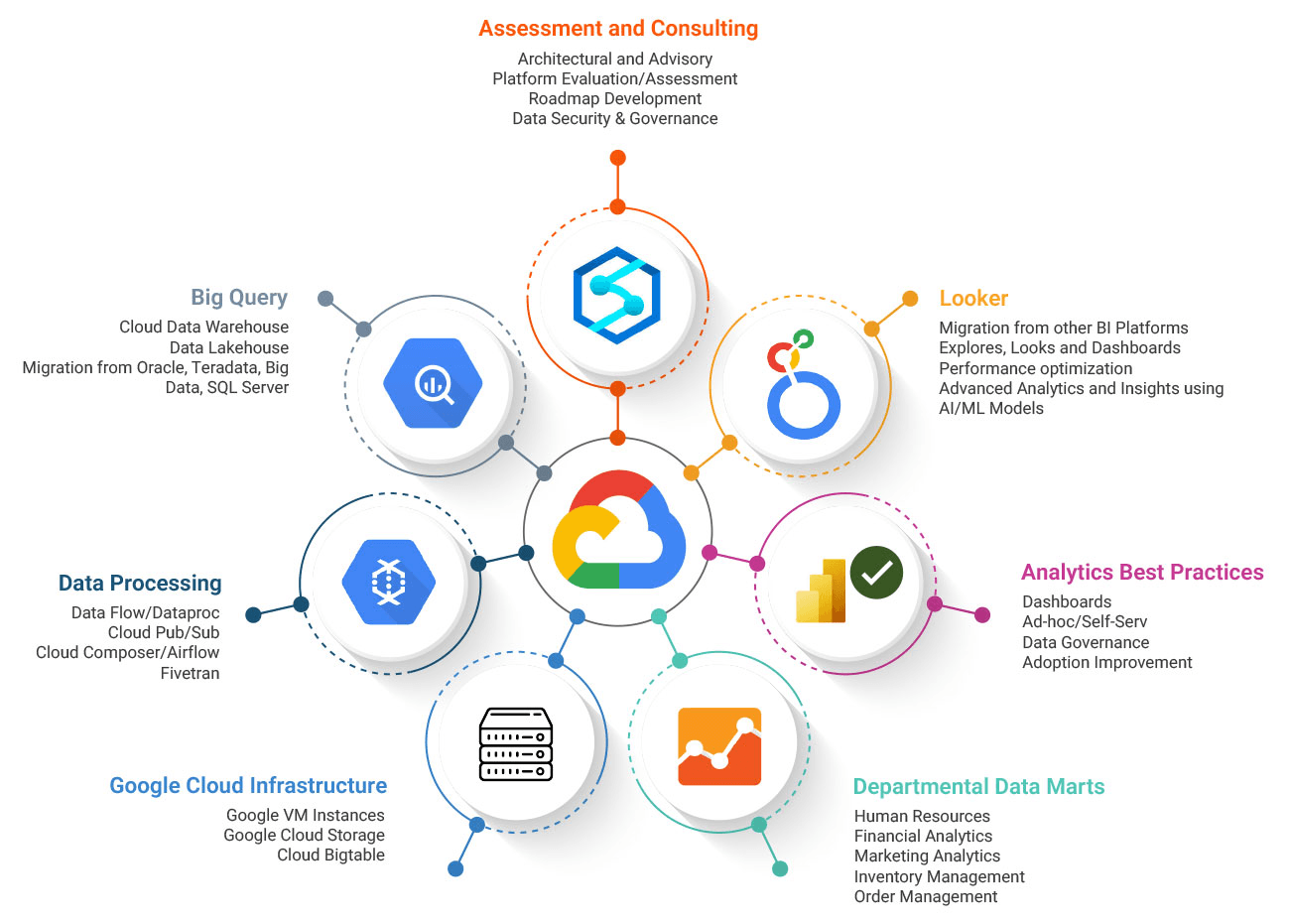
GCP Data & Analytics
Harnessing BigQuery's serverless architecture for petabyte-scale analytics and real-time intelligence.
MySQL & Open-Source Databases
Scaling MySQL for high-traffic web applications and migrating to cloud-managed alternatives.
Microsoft SQL Server
Enterprise SQL Server performance tuning, high availability design, and cloud migration expertise.
AWS Data & Analytics
Transforming raw operational data into actionable business intelligence using AWS.
GCP Data & Analytics
Harnessing BigQuery's serverless architecture for petabyte-scale analytics and real-time intelligence.